How to Fix WiFi Not Working on Samsung Galaxy S26 Ultra, S26+, and S26

Are you facing WiFi issues on your Samsung Galaxy S26 series? If your Samsung Galaxy S26 Ultra, S26+, or S26 won’t connect to WiFi, keeps disconnecting, or shows “Connected but no internet,” this complete troubleshooting guide will help you fix it quickly.

Whether you’re dealing with slow speeds, random drops, or WiFi not turning on at all, follow these proven solutions step-by-step.

Read More: How to Fix Bluetooth Connectivity Issues on Samsung Phone

Restart Your Phone (Quick Fix)
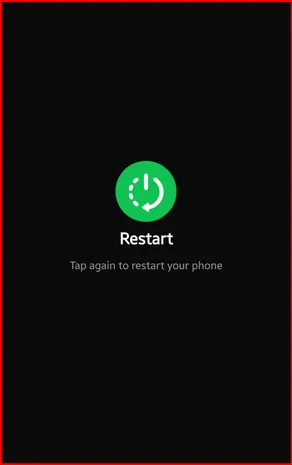
Restart Your Samsung Galaxy S26 to Fix WiFi Issue

Before trying advanced solutions, restart your phone.

How to restart:

  1. Swipe down the notification panel twice and tap the Power button icon.
  2. Tap Restart.
  3. Tap again Restart to restart your phone.
  4. Wait for the phone to reboot and reconnect to WiFi.

This fixes most temporary software glitches.

Turn WiFi Off and On

  1. Swipe down to open Quick Settings.
  2. Turn WiFi OFF.
  3. Wait 10 seconds.
  4. Turn it back ON and reconnect.

Sometimes the WiFi module just needs a refresh.

Restart Your Router

If other devices are also having issues:

  1. Unplug the WiFi router.
  2. Wait for 50-60 seconds.
  3. Plug it back in.
  4. Wait for a full reboot.
  5. Reconnect your Samsung device.

This fixes network-side problems.

Forget and Reconnect to WiFi Network
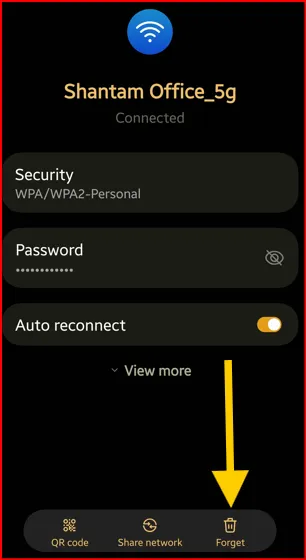
Fix Connected but no internet issue on Samsung S26 Ultra

If your phone says “Connected but no internet”:

  1. Go to Settings > Connections > WiFi
  2. Tap the Settings gear icon of your connected network.
  3. Tap Forget at the bottom right.
  4. Re-enter the WiFi password and reconnect.

Read More: How to Fix No Internet Connection Issue on Samsung Galaxy

Reset WiFi Settings
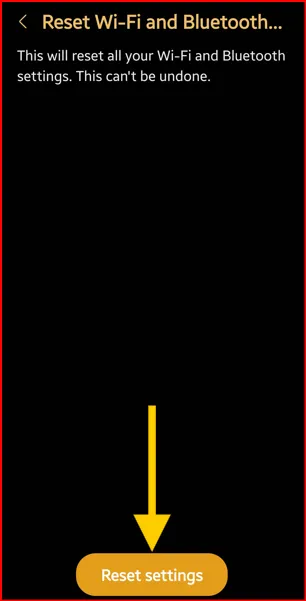
How to Fix WiFi Not Working on Samsung Galaxy S26 Ultra, S26+, and S26

If WiFi keeps disconnecting:

  1. Open Settings
  2. Tap General Management
  3. Scroll down and tap Reset at the bottom.
  4. Tap Reset Wi-Fi and Bluetooth settings.
  5. Tap Reset settings to confirm it.

This will remove saved WiFi passwords and Bluetooth device settings.

Check for Software Updates

Samsung frequently releases updates to fix connectivity bugs.

  1. Go to Settings
  2. Tap Software Update
  3. Tap Check for Updates
  4. Select Download and Install

Make sure your S26 series is running the latest version of One UI (8.5).

Disable Smart WiFi Switching

Sometimes Smart Network features interfere with WiFi stability.

  1. Go to Settings > Connections > WiFi
  2. Tap the three dots (⋮) at the top right
  3. Tap Intelligent WiFi
  4. Disable:
    • Switch to mobile data
    • WiFi power saving mode (temporarily)

Test your connection again.

Boot in Safe Mode

If a third-party app is causing WiFi problems:

  1. Press and hold the Power button (Side Button) to access the power menu.
  2. Tap and hold Power Off until you view the safe mode icon
  3. Tap Safe Mode
  4. Check your WiFi connection

If WiFi works in Safe Mode, uninstall recently installed apps one by one until you fix Samsung S26 WiFi issues.

Factory Reset (Last Option)
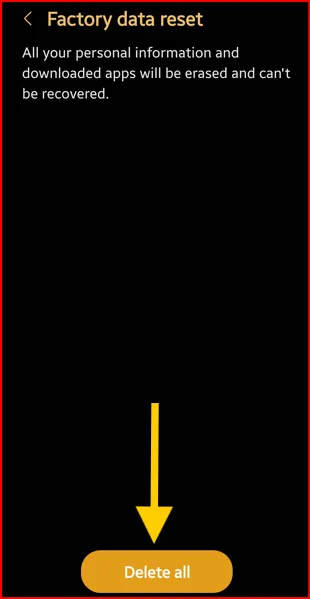
Factory Data Reset Samsung S26 Ultra

If nothing works:

  1. Back up your Samsung S26’s data.
  2. Go to Settings > General Management > Reset
  3. Tap Factory Data Reset
  4. Tap Reset
  5. Unlock your device
  6. Tap Delete all

This will restore your device to default settings.

Possible Hardware Issue

If WiFi:

  • Won’t turn ON at all
  • Shows constant “Error”
  • Disconnects even after reset

It may be a hardware problem. Visit an authorized Samsung service centre

Why Is WiFi Not Working on Samsung Galaxy S26?

Common causes include:

  • Software bugs
  • Corrupt network settings
  • Router issues
  • Outdated firmware
  • Third-party apps conflict
  • Hardware damage

Final Thoughts

Most WiFi problems on the Samsung Galaxy S26 Ultra, S26+, and S26 can be fixed with a simple restart or network reset. If you follow all the steps above, your connection should be stable again.

If you’re still having issues, consider contacting Samsung Support or your Internet Service Provider.

Frequently Asked Questions (FAQs):

Why does my Galaxy S26 keep disconnecting from WiFi?

It may be due to power-saving features, router problems, or outdated software.

Why is WiFi connected but no internet?

Your router may not be providing internet access. Restart the router or contact your ISP.

How do I fix slow WiFi on Samsung Galaxy S26?

Move closer to the router, reset network settings, disable VPN, or switch to 5GHz band.

If this guide helped you fix your WiFi issue, bookmark this page and share it with others facing the same problem!
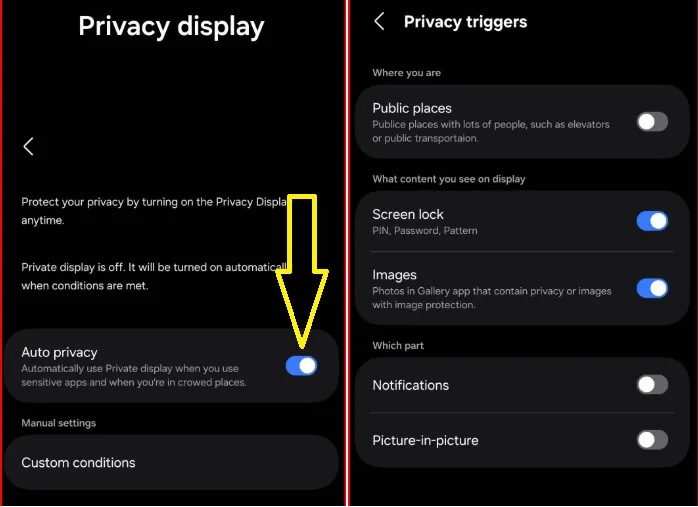
Galaxy S26 Ultra Privacy Display Settings with Automatic Triggers

Samsung’s upcoming flagship, the Samsung Galaxy S26 Ultra, is launching with one of the most privacy-focused smartphones ever released. A recent settings leak reveals a new Privacy Display feature that automatically protects on-screen content without requiring users to manually enable it. Automatically use private display when using sensitive apps and in crowded places.

Read More: Samsung Accidental Touch Protection

What Is Samsung’s Privacy Display?

Galaxy S26 Ultra Privacy Display Settings with Automatic Triggers

Privacy Display appears to be a built-in screen protection system that limits viewing angles, similar to a physical privacy screen protector. Samsung is integrating the feature directly into the display and One UI software. When active, content on the Galaxy S26 Ultra screen becomes difficult to read from the sides, helping prevent it in public places.

This approach allows users to maintain full brightness and clarity when looking straight at the device while obscuring sensitive information from nearby viewers.

Automatic Triggers for Sensitive Situations

The most significant aspect of the leak is automatic activation. According to early One UI settings details, Privacy Display may turn on based on context and usage patterns. Potential triggers include:

  • Opening sensitive apps such as banking or password managers
  • Situations where the phone detects nearby viewers or public exposure
  • Entering crowded environments like public transport or elevators

This means the Samsung S26 Ultra could automatically shield notifications, financial data, or private conversations without any manual enable

Granular User Controls

Samsung also appears to be adding extensive customization options. Leaked settings suggest users can:

  • Select which apps trigger Privacy Display
  • Choose custom conditions for activation
  • What content do you see on your display

Why It Matters for Smartphone Privacy

Samsung’s approach represents a shift toward context-aware, automated privacy protection. If implemented as described, the Galaxy S26 Ultra could proactively prevent visual data exposure in crowded settings

No mainstream smartphone currently offers fully automated angle-based privacy integrated at the system level, making this feature a potential differentiator for Samsung’s 2026 flagship

Expected Availability

The Privacy Display feature is expected to debut with the Galaxy S26 Ultra and may remain exclusive to Samsung’s top-tier model due to advanced display and sensor requirements. As with all pre-release leaks, details could change before Samsung officially announces the Galaxy S26 series.

All Other Samsung Galaxy S26 Series Rumours:

Samsung S26 Ultra Release Date: Launch announcement 25th February, 2026

Samsung S26 Ultra Specs (Expected):

  • Chipset: Snapdragon 8 Elite Gen 5 (global)
  • RAM/Storage: 12 GB/16 GB RAM, up to 1 TB storage
  • OS: Android 16 with One UI 8.5
  • Display: 6.9” Dynamic AMOLED 2X, 120 Hz
  • Resolution: 3120 × 1440 (QHD+)
  • New feature: First-ever built-in Privacy Display with limited viewing angles
  • Advanced AI features (Galaxy AI focus)
  • Improved cooling/thermal system
  • Slimmer, lighter design

Samsung S26 Ultra Price (Expected): Likely similar or slightly higher than S25 Ultra

FAQs:

When is the S26 Ultra coming out?

The Samsung Galaxy S26 Ultra is expected to be officially announced on February 25, 2026, at Samsung’s Galaxy Unpacked event in San Francisco. You can pre-order typically right after the event. You’ll receive it in March.

What’s new in Android 17 Beta 1: All Changes

Android 17 Beta 1 has officially arrived, bringing new features, system improvements, and visual changes for Google Pixel devices. In this article, we explain what’s new in Android 17 Beta 1, including UI updates, Widget search, performance optimizations, and early feature additions compared to the previous Android 16 builds.

If you’re using a compatible Google Pixel device or planning to install Android 17 Beta, this tutorial covers all the important changes and new features you need to know.

Android 17 Beta 1: All Changes

Check out the following top changes on the Google Pixel device running Android 17 Beta 1.

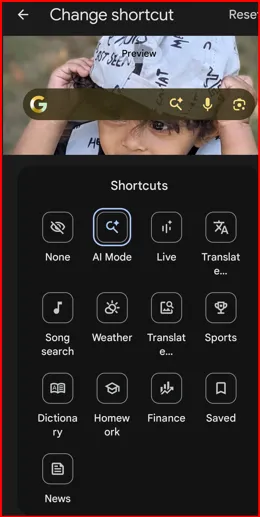
Change Search Widget on Home Screen

You can see a list of new shortcuts to add to the search bar, such as AI mode, Live, Song search, Weather, Translate, Finance, Sports, etc.

Change Search Widget on Home Screen

To change the search widget: Long-press on the Search bar widget on your Pixel home screen > Widget settings > Change shortcut > Choose a shortcuts you want to add to the search widget

New Volume Overflow Icon

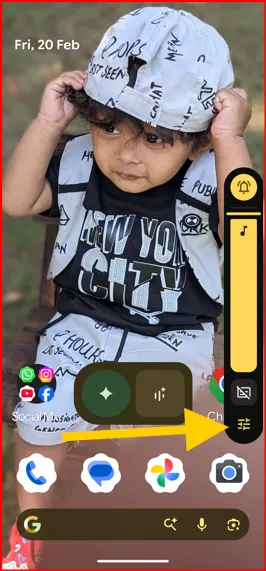
New Volume Overflow Icon Android 17 Beta 1

Press the Volume up or down button, and you can see the volume bar with a new overflow icon (Android 17 Beta) instead of three dots (Android 16)

Gemini Screen Shrink Animation for Corner Swipe

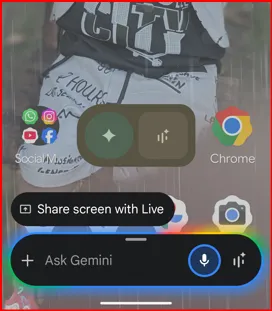
Swipe up from the bottom corner to access the Gemini screen on your Pixel. If you can’t access it, make sure to enable swipe to invoke the assistant.

Android 17 Beta 1 All Changes

To enable: Settings > System > Navigation mode > Choose a Gesture navigation > Settings Gear icon > Toggle on Swipe to invoke the assistant

More Compact Settings in the Menu

Remove the vertical heights from the menu for a compact look.

Updated Brightness Icon

Darker Location Indicator Icon

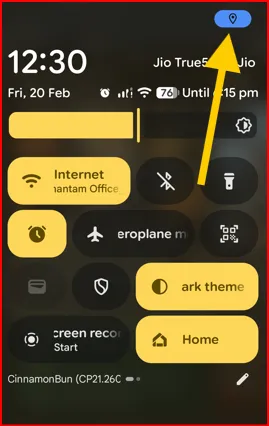
Location Indicator Android 17 Beta 1

When you enable location, you can see a darker location icon in the top-right status bar compared to the previous version.

Android 17’s Codename is CinnamonBun

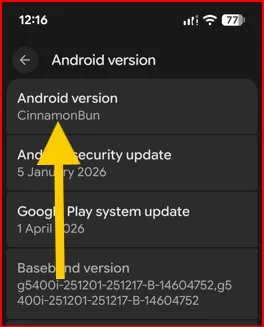
Android 17’s Codename CinnamonBun

You can check the latest Android 17.0 codename by swiping down the notification panel twice or About phone settings (Settings > About phone > Android version)

Subscribe for ongoing Android 17 updates, Pixel tips, and the latest Android beta.

FAQs:

When is Android 17 Release Date?

Android 17 stable release date is June 2026 (expected), launch with the Google Pixel device. Android 17 beta 1 already launched.

Will Pixel 7 Pro get Android 17?

Yes, Google Pixel devices always receive Android updates before any other brand. Android 17 Beta is already available for Pixel 6 and newer.

How to Install Android 17 Beta on Pixel

Android 17 Beta is now available for eligible Google Pixel devices, bringing new performance improvements, a new UI for a more compact menu, and camera upgrades ahead of the official release. If you want to test the latest Android version features early, you can install Android 17 Beta safely using Google’s Android Beta Program or manual flashing methods. Android 17 Beta 1 (CP21.260116.011.B1) update size is 843 MB. This guide explains the easiest and safest way to install Android 17 Beta on your Pixel phone.

Eligible Pixel Devices for Android 17 Beta

Android 17 Beta supports recent Pixel models, including:

  • Pixel 10/10 Pro/10 Pro XL/10 Pro Fold
  • Pixel 9 / 9 Pro / 9 Pro XL
  • Pixel 8 / 8 Pro / 8a
  • Pixel 7 / 7 Pro / 7a
  • Pixel Fold
  • Pixel Tablet

Older Pixel devices typically do not receive Android 17.0

Read More: What’s New in Android 17 Beta 1 for Pixel

Before Installing Android 17 Beta

Before upgrading your Pixel, keep these important points in mind:

  • Beta software may contain bugs and stability issues
  • Some apps may not work properly
  • Reduce the Battery life initially
  • Always back up your data before installing

Method 1: Install Android 17 Beta on Pixel via Android Beta Program (Recommended)

This is the easiest and safest method. No data loss.

Step-by-step:

How to Install Android 17 Beta on Pixel

  1. Open the Android Beta Program on your device
  2. Sign in with the Google account used on your Pixel
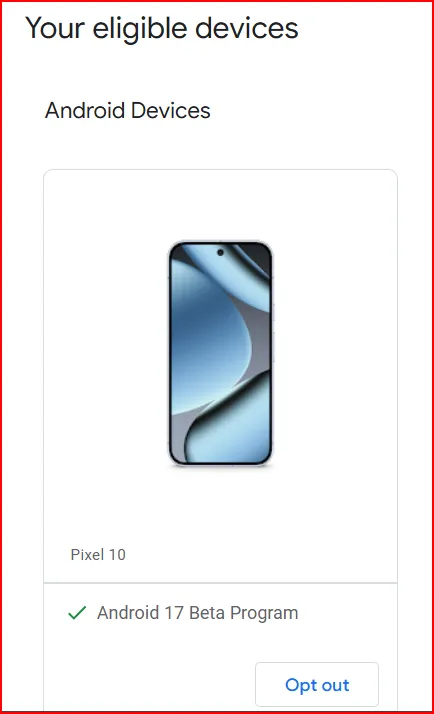
  3. Tap on View your eligible devices
  4. Click Opt-in
  5. Accept beta terms
  6. On your Pixel:
    • Go to Settings > System > Software updates > System update
  7. Tap Check for update
  8. Tap Download and install to get Android 17 Beta to your Pixel devices.
  9. Tap Restart Now

Your Pixel will reboot and install the beta update.

Method 2: Manually Install Android 17 Beta (Advanced)

Use this method if you want early builds or a clean installation

Requirements:

  • Computer with Chrome
  • USB cable
  • Pixel phone
  • USB debugging enable

Steps:

  1. Enable Developer Options: Settings > About phone > Tap Build number 7 times > Go back > System > Developer options
  2. Enable USB debugging
  3. Connect the Pixel to the computer
  4. Open Android Flash Tool website
  5. Allow browser permissions
  6. Select Android 17 Beta build
  7. Click Install

This method may wipe data depending on the options selected.

How to Leave Android 17 Beta

If you want to return to a stable Android:

  1. Go to the Android Beta Program site
  2. Click Opt-out
  3. Install the downgrade update

Downgrading wipes device data.

What You Get in Android 17 Beta

After installing, your Pixel gains:

  • Better performance & smoothness
  • Camera improvements
  • Pixel Launcher customization
  • UI polish and animations

Should You Install Android 17 Beta?

Install if you:

  • Want new Android features early
  • Create Android content or reviews
  • Enjoy testing beta software

Avoid if you rely on your Pixel for daily critical use.

Conclusion

Installing Android 17 Beta on Pixel is simple through the Android Beta Program and takes only a few minutes. It’s the safest way to experience Google’s latest Android features before the official release. Just remember to back up your data and expect minor bugs, as beta software is still under development.

FAQs:

When is Android 17 Coming Out?

Android 17 is already in beta – and the final stable release is expected in May–June 2026, with Pixel phones getting it first.

Samsung Accidental Touch Protection

Samsung Accidental Touch Protection is a smart feature built into Samsung Galaxy devices that prevents unintended screen touches when your phone is inside your pocket, bag, or in a dark place. It helps avoid accidental calls, unwanted actions, or app openings. This Accidental touch Samsung feature is available on devices running One UI (8.5/8/7 & older), including Galaxy S, A, M, and Fold series.

What Is Accidental Touch Protection Samsung Galaxy?

Accidental Touch Protection uses your phone’s proximity and light sensors to detect when the device is in a dark place (such as a bag or pocket).

Read More: Always On Display Settings Samsung Galaxy

When activated:

  • The screen stays locked
  • Touch input is disabled
  • You’ll see a notification: “Accidental touch protection is on”

This prevents:

  • Pocket dialing
  • Random open app
  • Battery drain from screen activity

How to Enable Accidental Touch Protection on Samsung Phone

Follow these steps:

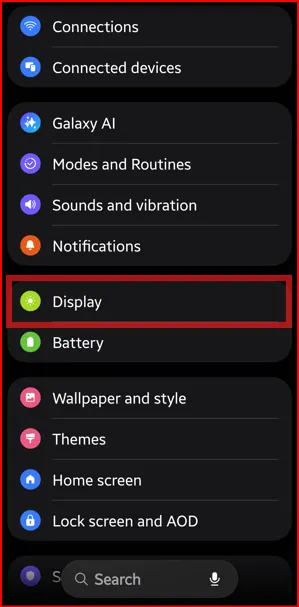
  1. Open Settings

Samsung Display Settings for Accidental Touch Protection

2. Tap Display

Samsung Accidental Touch Protection

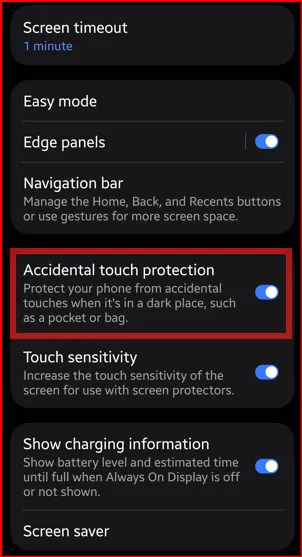
3. Scroll down and turn on Accidental Touch Protection

Read More: Increase Touch Sensitivity on Samsung for Screen Protector

How It Works in Your Real Life

  • When your device is in your pocket, and the screen turns on, it detects darkness.
  • Touch input is blocked.
  • To unlock, swipe the screen as instructed.

It’s especially useful during:

  • Walking or traveling
  • Keeping the phone in tight jeans or a bag
  • Workout sessions

If Accidental Touch Protection Not Working

Try these fixes:

✔ Make sure to turn on
✔ Clean your phone’s proximity sensor area (near the front camera)
✔ Remove screen protectors if thick
✔ Check for Software Update

Does it affect the battery?

No, it actually helps save battery by preventing the screen from waking unnecessarily due to accidental touches.

Final Thoughts

Samsung Accidental Touch Protection is a simple yet powerful safety feature that helps protect your phone from unintended touches. If you often keep your device in your pocket or bag, enabling this setting can prevent accidental calls and save battery life.

FAQs:

How do I activate Accidental Touch Protection Samsung?

To enable Accidental Touch Protection on Samsung phones:
Settings > Display > Accidental touch protection > Make sure to Toggle On
Once enabled, the screen will ignore touches when it detects the phone is in your pocket or in a dark place.

Can I use Accidental Touch Protection with Always On Display?

Yes. Accidental Touch Protection works with Always On Display. The screen will still display AOD information, but it will block accidental touches until the phone is removed from a pocket or dark area.

How do I turn off Accidental Touch Protection on Samsung?

To disable it:
Settings > Display > Accidental touch protection > Turn Off
Turning it off allows normal touch input even when the phone is in a pocket or dark space.

Does Accidental Touch Protection drain battery on Samsung?

No. Accidental Touch Protection uses existing proximity and light sensors already active on your phone, so the battery impact is negligible.

Why isn’t my Samsung screen responding due to Accidental Touch Protection?

If the phone thinks it is still covered or in a dark place, touches remain blocked. Move the phone into light or uncover the top sensor area to unblock the touch sensor.

Pixel Notification Dots

Pixel Notification Dots are small colored notification indicators that appear on the specific app icons when you receive a new notification on your Google Pixel devices. If you’re using a Pixel device, this feature is built into the Pixel Launcher. It helps you quickly identify which apps have unread messages or alerts without opening the quick notification panel.

Let’s explore how notification dots work, how to enable them, and how to customize them on your Google Pixel phone.

Read More:

What Are Pixel Notification Dots?

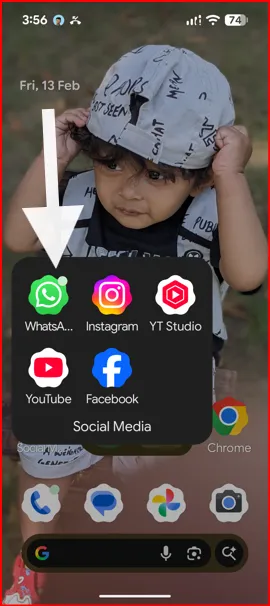
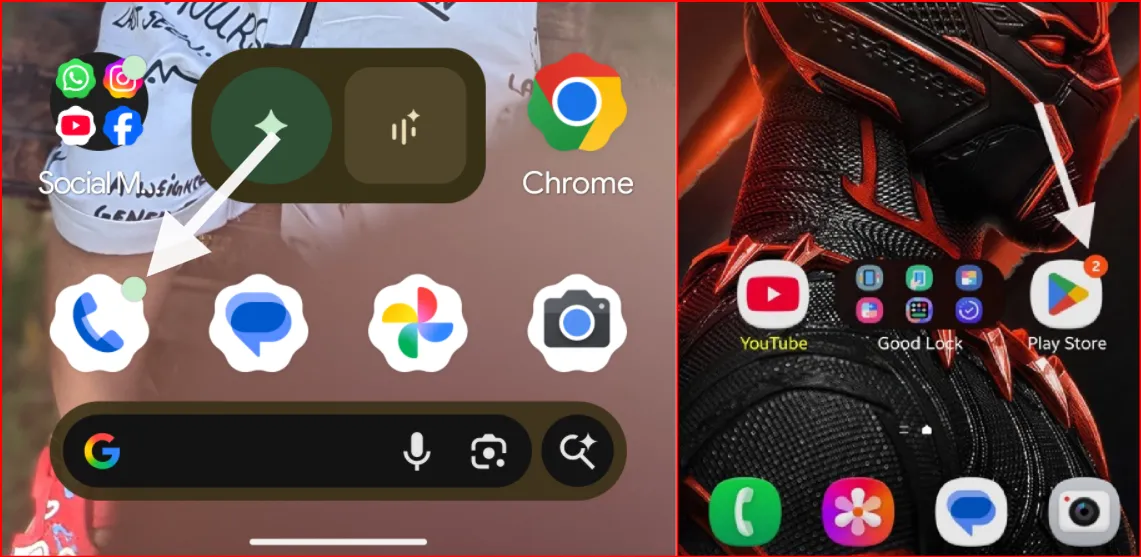
Notification dots are small circles that appear in the upper-right corner of a Pixel app icon dot when you receive any new messages on your device:

What Are Pixel Notification Dots

  • New messages
  • Missed calls
  • App updates

Instead of checking every app manually, the dot icon reminds you of new notifications on your device.

How to Enable or Disable Notification Dots on Pixel

Follow these simple steps to your Pixel device:

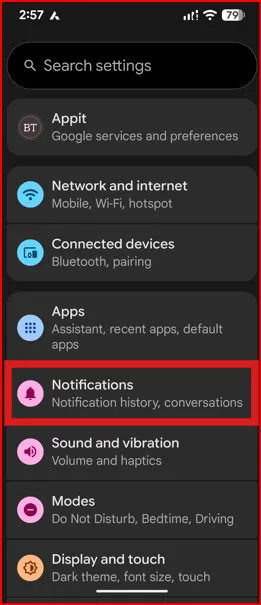
  1. Open Settings

Google Pixel Notification Settings

2. Tap Notifications

How to Enable or Disable Notification Dots on Pixel

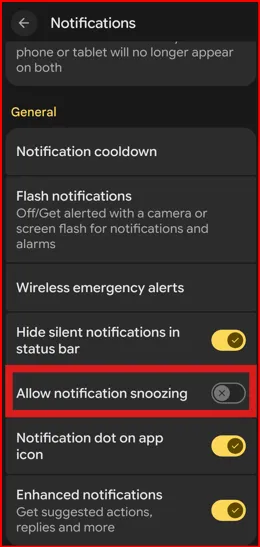
3. Turn Notification dot on app icon On or Off

Once enabled, any app with an unread notification will display a dot on its icon.

How to View Notifications from the Dot

On Pixel devices, tap the app to read the notification.

This feature makes it easier to manage notifications on your Android device without pulling down the notification panel.

Can You Customize Notification Dots Pixel Phone?

On Stock Pixel UI:

  • You cannot change the color or size of the dot notification
  • They follow the system’s dynamic theme

If you want more customization (color, size, style), you may need:

  • Third-party launchers like Nova Launcher
  • Custom Android themes (advanced users)

Notification Dots vs Badges Android: Pixel vs Samsung Notification Badges (Numbers)

Pixel vs Samsung Notification Badges

Pixel phones use dots only, not badge numbers like Samsung Galaxy, Xiaomi, etc. (like “5” unread messages).
However, some third-party launchers support numeric badges if you prefer to see the exact number of missed messages.

Why Google Pixel Notification Dots Are Useful

✔ Clean & minimal design
✔ Quick visual alert
✔ Saves time
✔ Matches Pixel’s Material You interface

Troubleshooting: Notification Dots Not Showing?

If Google Pixel notification dots are not appearing:

  • Make sure the Notification dot on app icon is On
  • Check if app notifications are enabled
  • Clear the Pixel Launcher cache
  • Restart your Pixel device

Final Thoughts

Pixel Notification Dots are a small yet powerful feature that enhances your daily smartphone experience. If you’re using a Google Pixel device, enabling notification dots can make managing notifications faster and more convenient.

FAQs:

What are notification dots on Pixel phones?
Notification dots are small colored indicators that appear on app icons when you have unread notifications on your Google Pixel device.

How do I turn on notification dots on Pixel?
Go to Settings > Notifications > Notification dot on app icon and toggle them on.

Why are notification dots not showing on my Pixel?
This usually happens when app notifications are turned off, notification dots are disabled, or Do Not Disturb mode is active.

Can I customize the notification dot color on a Google Pixel?
No, Pixel phones use system-controlled colors based on the app icon and Material You theme.

Do notification dots work on all Pixel models?
Yes, notification dots are available on all Pixel phones running Android 12 and newer.

What’s the difference between notification dots and badges?
Notification dots show presence only, while badges display the number of unread notifications, like Samsung One UI.

How do I clear notification dots on the Pixel?
Open the app with the unread messages, or clear the notification panel.

Why do some apps not show notification dots?
The app may not support this feature, or its notifications may be disabled.